Most apps fail because they’re slow, buggy, or hard to use. This guide explains mobile app development in 2026, including app types, process, costs, and common mistakes businesses should avoid.
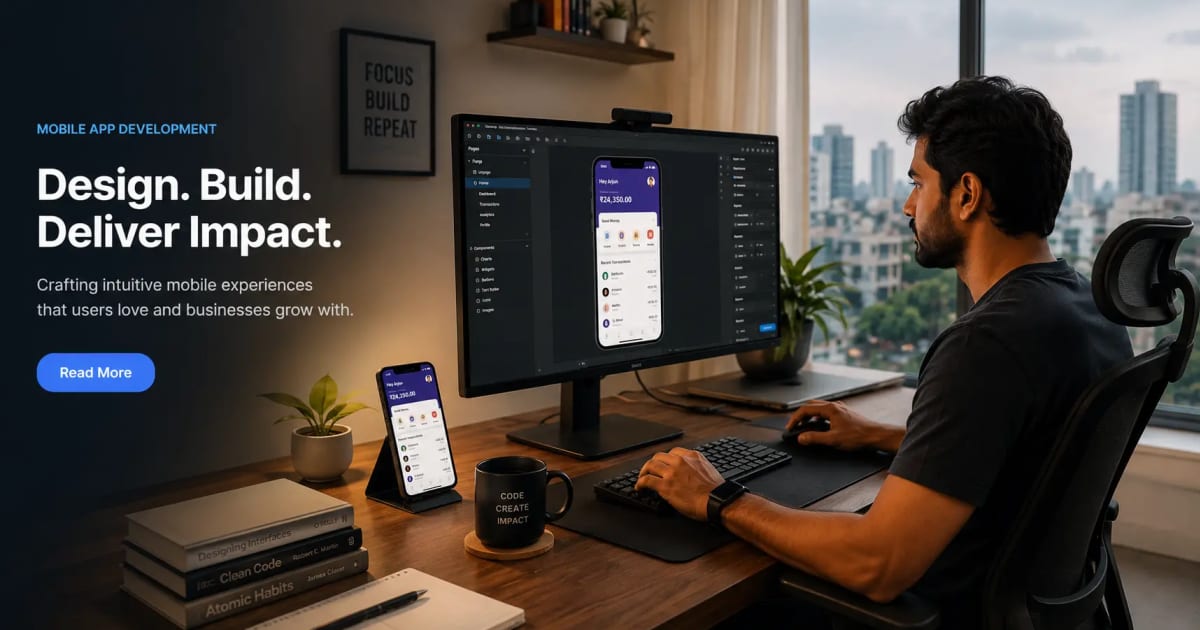
Most businesses don't lose users because of a bad product idea. They lose them because the app is slow, buggy, or hard to use. A retail app that crashes during checkout or a booking platform that takes 8 seconds to load a screen will drive users straight to a competitor -and they rarely come back.
We've seen this pattern a lot over the past 6 years. At Katchin Tech, we build mobile apps for startups and enterprises across India, the US, and the UK. This guide covers what actually goes into building a mobile app in 2025 -the types, the process, what it costs, and where most projects go wrong.
What Is Mobile App Development?
Mobile app development is the process of designing, building, testing, and shipping software for phones, tablets, and wearables. It covers everything from the first sketch of a user journey to backend infrastructure, QA, and getting your app live on the App Store or Google Play. There are three main ways to build:
Mobile app development is the process of designing, building, testing, and shipping software for phones, tablets, and wearables. It covers everything from the first sketch of a user journey to backend infrastructure, QA, and getting your app live on the App Store or Google Play. There are three main ways to build:
1. Native App Development: You build separately for iOS and Android -Swift for iOS, Kotlin for Android. This gives you the best performance and full access to device hardware like Face ID, NFC, or the camera. If your app needs to feel fast and tight on a specific platform, native is the way to go.
2. Cross-Platform Development: One codebase, both platforms, using React Native or Flutter. The performance gap with native has narrowed a lot. For most apps -especially at the startup stage -cross-platform lets you ship faster, keep one team, and still deliver a quality experience on both iOS and Android.
3. Progressive Web Apps (PWA): A web app that behaves like a native app -works offline, supports push notifications, can be pinned to the home screen. No app store required. Good fit when you need wide device coverage and a lower development overhead.
Why Get a Mobile App Built in 2025
People spend over 90% of their phone time inside apps, not browsers. If your business relies on repeat engagement, a dedicated app gives you tools a mobile website simply can't match.
1. You own the channel: Push notifications and in-app messages reach users directly. No ad spend, no algorithm dependency.
2. Operations run faster: Internal apps cut down manual work, keep field teams connected, and reduce the back-and-forth that slows things down.
3. More ways to make money: Subscriptions, in-app purchases, premium features -these models work in apps and scale as your user base grows.
4. You can see what's actually happening: Apps show you exactly where users drop off, what they use most, and what's not working. That data drives better product decisions.
How We Build Mobile Apps at Katchin Tech
1. Discovery: We sit down with you -or get on a call -and work through what you're building, who it's for, and what success actually looks like. This is where scope gets locked down so there are no surprises later.
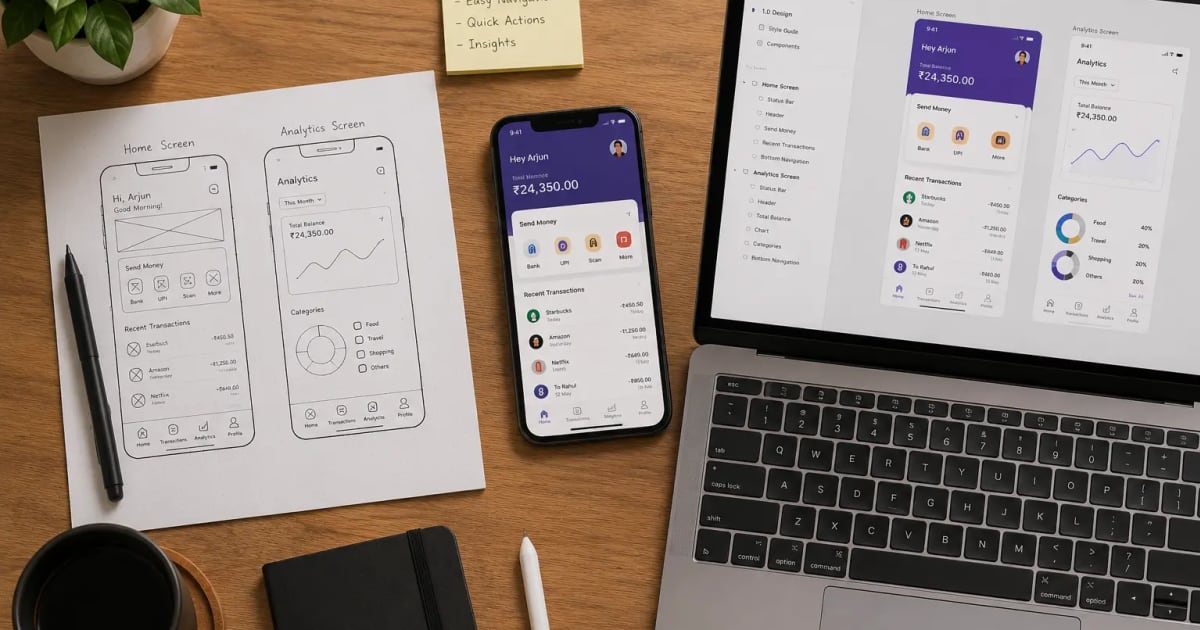
2. UX Research and Wireframing: We map out how users will move through the app before any design work starts. Fixing a bad flow at the wireframe stage takes hours. Fixing it after development takes weeks.
3. UI Design and Prototyping: You get a clickable prototype that looks and behaves like the finished product. Tap through it, flag what doesn't feel right, and sign off before we write a line of code.
4. Development: We work in two-week sprints. At the end of each one, you see real, working features -not status updates. You stay in the loop and can redirect priorities as things move.
5. QA and Testing: The app gets tested across real devices, OS versions, and network conditions. We look for performance issues, security gaps, and anything that could hurt the user experience at launch.
6. App Store Launch: We handle the submission for Apple App Store and Google Play -screenshots, metadata, compliance checks, and dealing with review feedback if it comes back.
7. Post-Launch: After launch we stay on. OS updates, bug fixes, performance monitoring, and new features as your product grows.
Industries We've Built For
1. Fintech and Banking: Wallets, investment platforms, and payment apps with proper compliance -PCI-DSS, biometric login, encrypted transactions.
2. Healthcare: Doctor booking, telemedicine, and patient management apps built to data protection requirements.
3. Retail and E-Commerce: Shopping apps with smart recommendations, product visualization, and checkout flows that don't leak conversions.
4. Logistics: Shipment tracking, fleet management, and driver apps that keep operations moving in real time.
5. Education: Learning platforms with live classes, progress tracking, and offline access for users on patchy connections.
6. Enterprise: Internal tools, field service apps, and CRM mobile clients built to plug into your existing systems.
What Determines the Scope of a Mobile App Project?
No two apps are the same, and the scope of any project depends on a handful of key factors. Understanding these upfront helps you plan realistically and avoid surprises mid-build.
1. Number of platforms: Building for iOS only, Android only, or both changes the timeline and team size required. Cross-platform frameworks like React Native and Flutter can cover both with a single codebase, which affects how the project is scoped.
2. Feature complexity: A simple app with a few screens is a very different project from one with real-time data, third-party integrations, payment processing, or role-based access. The more moving parts, the more time it takes to build and test properly.
3. Backend requirements: Some apps just need a basic server. Others need complex APIs, data pipelines, or integrations with existing enterprise systems. Backend architecture has a big impact on how long the project takes.
4. Design depth: A standard UI built on a component library is faster to produce than a fully custom design with animations and micro-interactions. Both are valid -it depends on what your product needs.
5. Post-launch support: Ongoing maintenance, feature updates, and OS compatibility work are a separate consideration. We always recommend planning for this from the start rather than treating it as an afterthought.
Every project we take on starts with a free consultation where we go through these factors in detail and give you a clear picture of what's involved. Reach out at info@katchintech.com or through the contact form at katchintech.com to get started.
Where Mobile App Projects Go Wrong
1. Trying to launch everything at once: The apps that do well almost always start small. Pick the core use case, ship it, see how people use it, then build from there.
2. Performance left to the end: A slow app is a dead app. Speed needs to be part of how the app is architected from day one -not something you try to fix with a patch before launch.
3. Cutting QA to save time: A bad launch costs more than the QA would have. App Store ratings are hard to recover, and negative reviews stick around.
4. No plan for updates: iOS and Android update constantly. If you don't have a maintenance plan, your app will break, and users will notice.
5. Picking the cheapest option: We've rebuilt a lot of apps that were done cheap the first time. That always ends up costing more than getting it right from the start.
Conclusion
A good mobile app takes time, the right process, and a team that knows what they're doing. When it's built well, it becomes one of the most valuable things your business has. When it's built poorly, it becomes a liability.
We've shipped 60+ apps over 6 years. Some were MVPs for first-time founders. Some were full rebuilds for companies that outgrew their original product. The approach is the same either way -understand the problem first, build only what's needed, and keep improving after launch.
Work With Katchin Tech
We're a mobile app development company based in Delhi NCR with clients across India, the US, and the UK. We work with startups, growing businesses, and enterprises on iOS, Android, and cross-platform builds.
If you have a project in mind, email us at info@katchintech.com with a quick description of what you're looking to build. We reply within 8 business hours. Or fill out the contact form at katchintech.com and we'll set up a free call to talk through the details.
No sales pitch. Just a straight conversation about what you need.
Frequently Asked Questions
Q: Which is the best mobile app development company in Delhi NCR? Katchin Tech has been building mobile apps for 6+ years with 60+ products shipped for clients in India and abroad. Drop us a line at info@katchintech.com to see if we're the right fit for your project.
Q: How long does it take to build a mobile app? An MVP is usually 6–10 weeks. A mid-complexity app runs 3–5 months. Enterprise builds depend on scope but typically take 6–12 months.
Q: How much does it cost to build an app in India? It depends on what you're building -the platforms, features, backend complexity, and support requirements all factor in. Email info@katchintech.com or fill out the form at katchintech.com and we'll give you a proper estimate based on your specific project.
Q: Do you build for both iOS and Android? Yes -native iOS (Swift), native Android (Kotlin), and cross-platform via React Native and Flutter.
Q: How do I get started? Email info@katchintech.com or use the contact form at katchintech.com. We'll get back to you within 8 business hours.